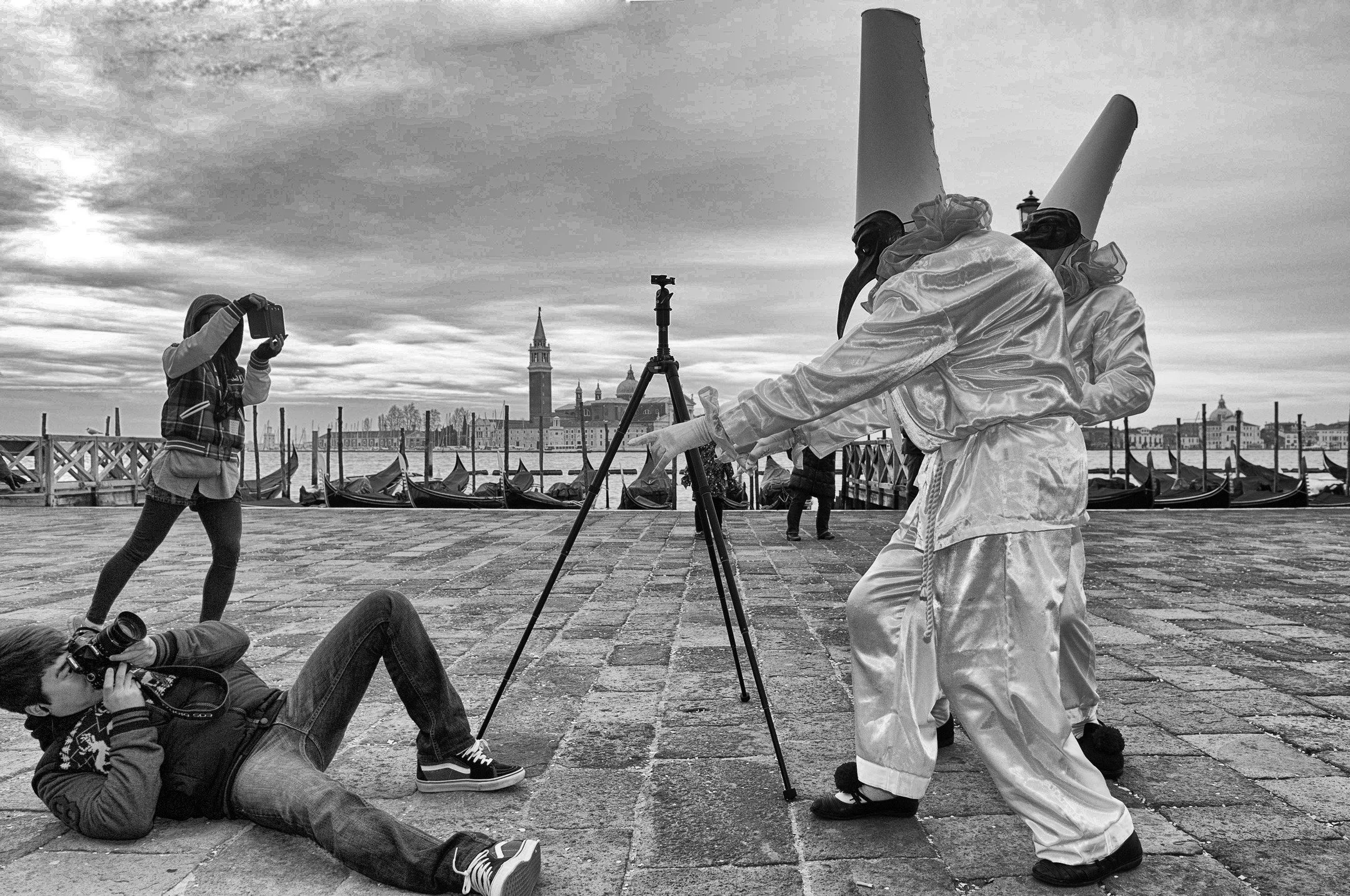
VENICE CARNIVAL FOR PHOTOGRAPHERS
/Venice Carnival is one of the most photogenic events in Europe, and also one of the most misunderstood.
People imagine it as a scheduled festival, with a clear programme, a main stage, and predictable “moments”. In reality, the best photography happens in the gaps, in the side streets, in the quiet corners, and in the small rituals that repeat themselves year after year.
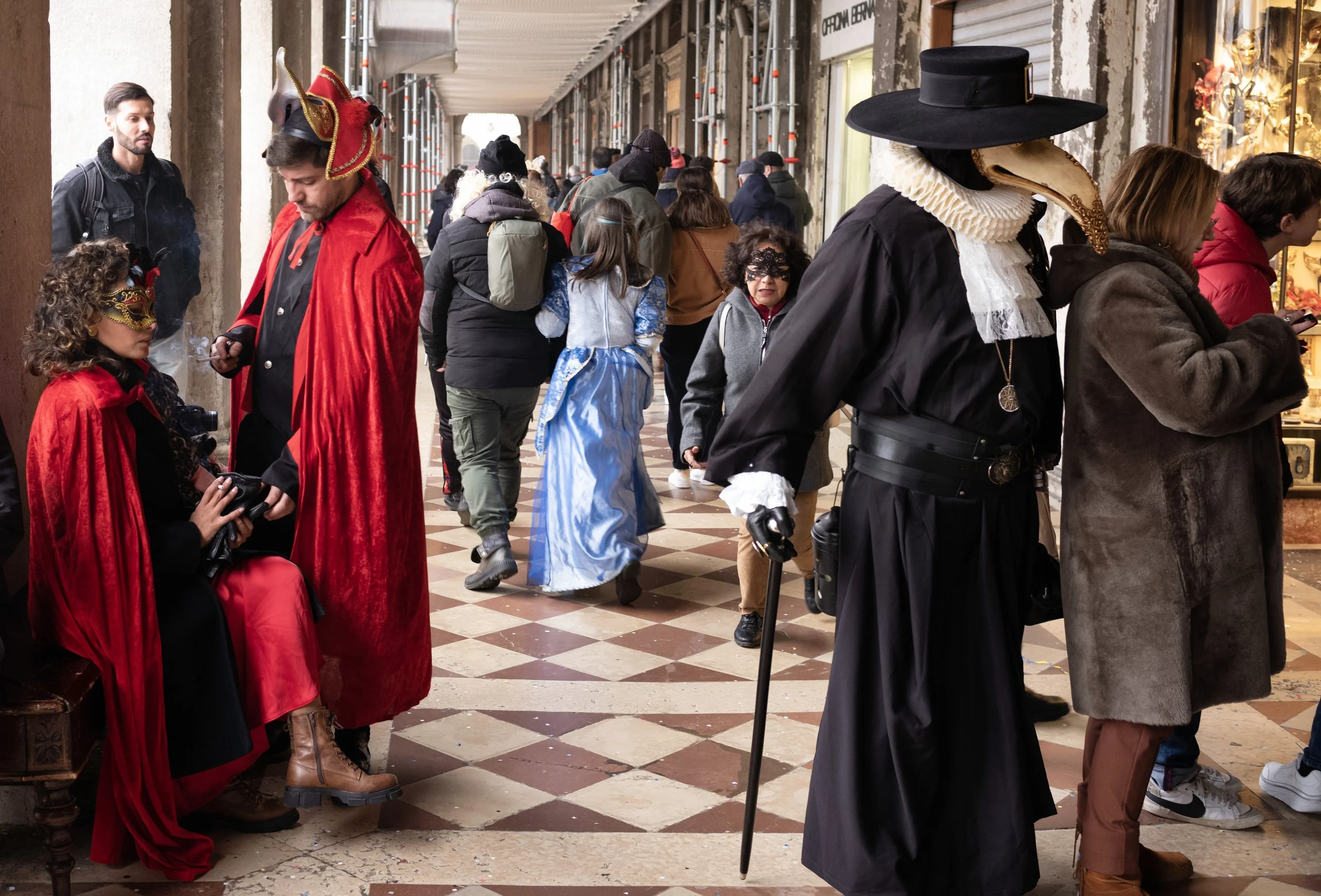
Carnival in Venice is not just an event you attend. It’s a living theatre that moves through the city, and if you photograph it well, you’re not documenting costumes, you’re photographing atmosphere, character, gesture, and story.
This is how to approach it like a photographer, not like a tourist.
1) The biggest myth: “I’ll just follow the programme”
Yes, Venice has official moments, but the strongest images rarely come from the official timetable.
The real Carnival is built on habit and tradition, not strict scheduling. Costumed participants tend to meet in familiar places, follow routes that feel natural, and repeat the same behaviours because they’ve been doing it for years.
That means two things:
You don’t “hunt” Carnival, you learn its rhythm.
The more time you spend in the city, the more the city gives back.
If you only have one short session, you can still get excellent images, but you need to work smarter and avoid wasting your best light in the wrong places.
2) What makes Venice Carnival a photography goldmine
Carnival isn’t just “pretty masks”. It’s a rare combination of ingredients that photographers dream about:
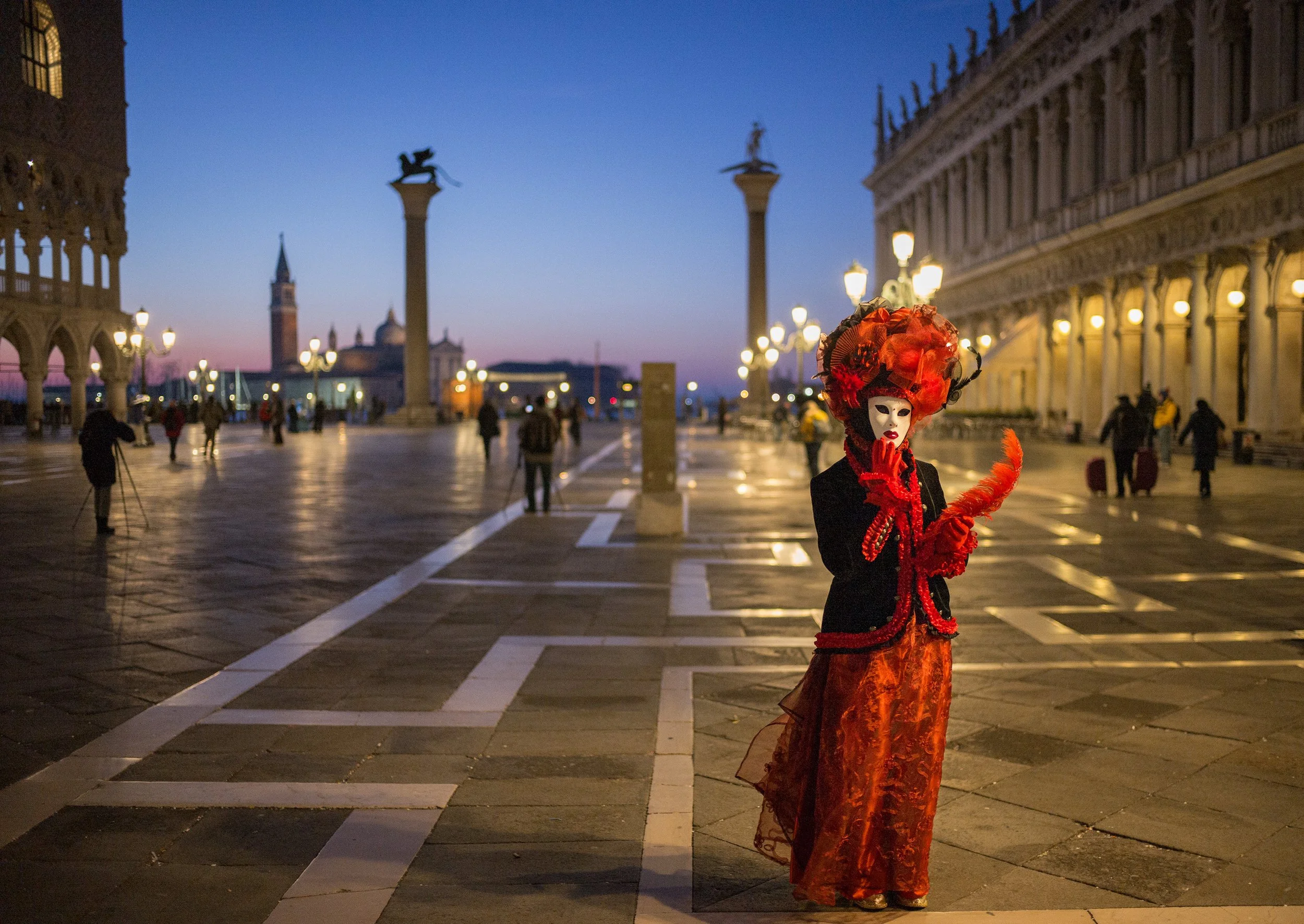
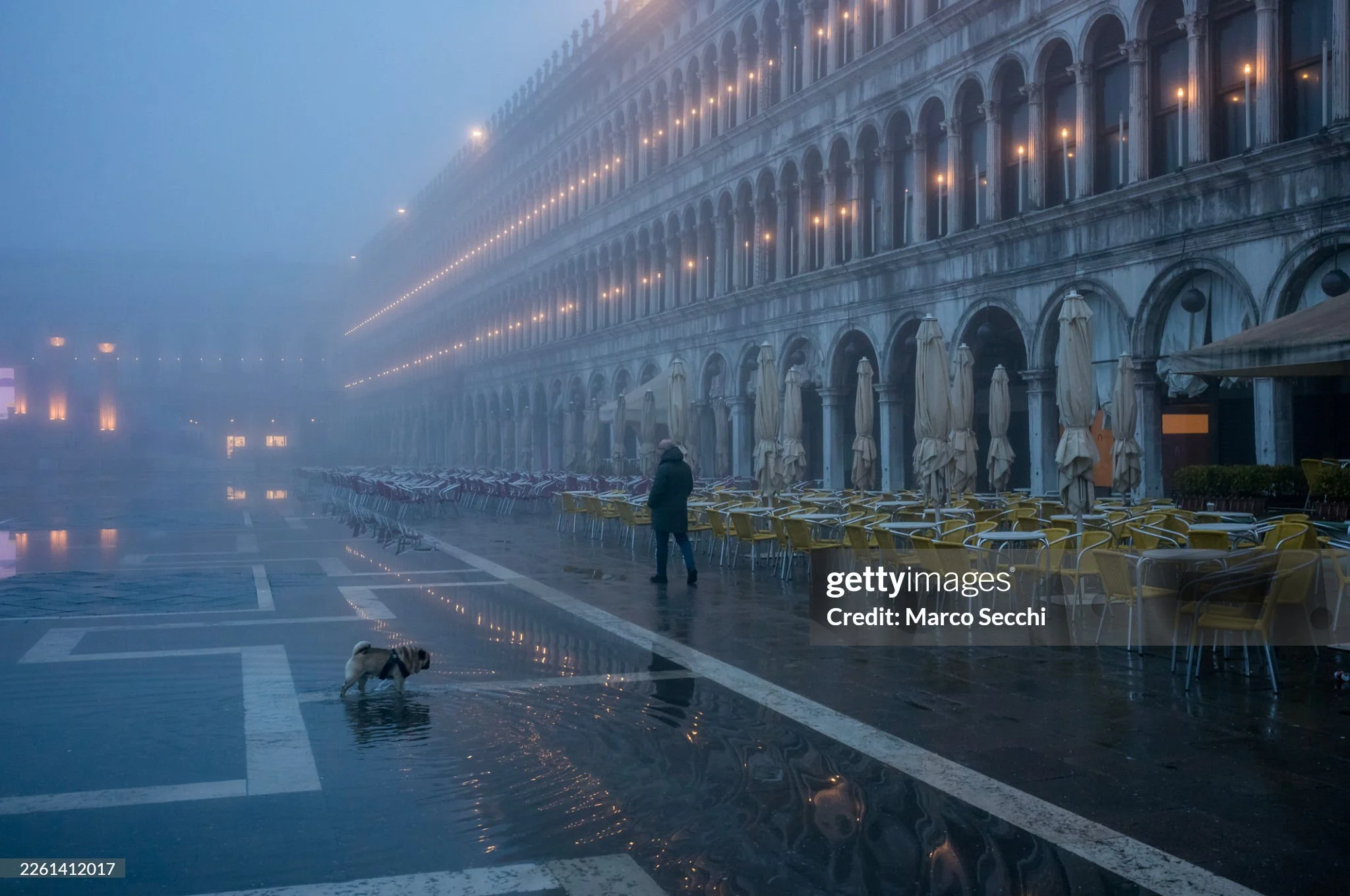
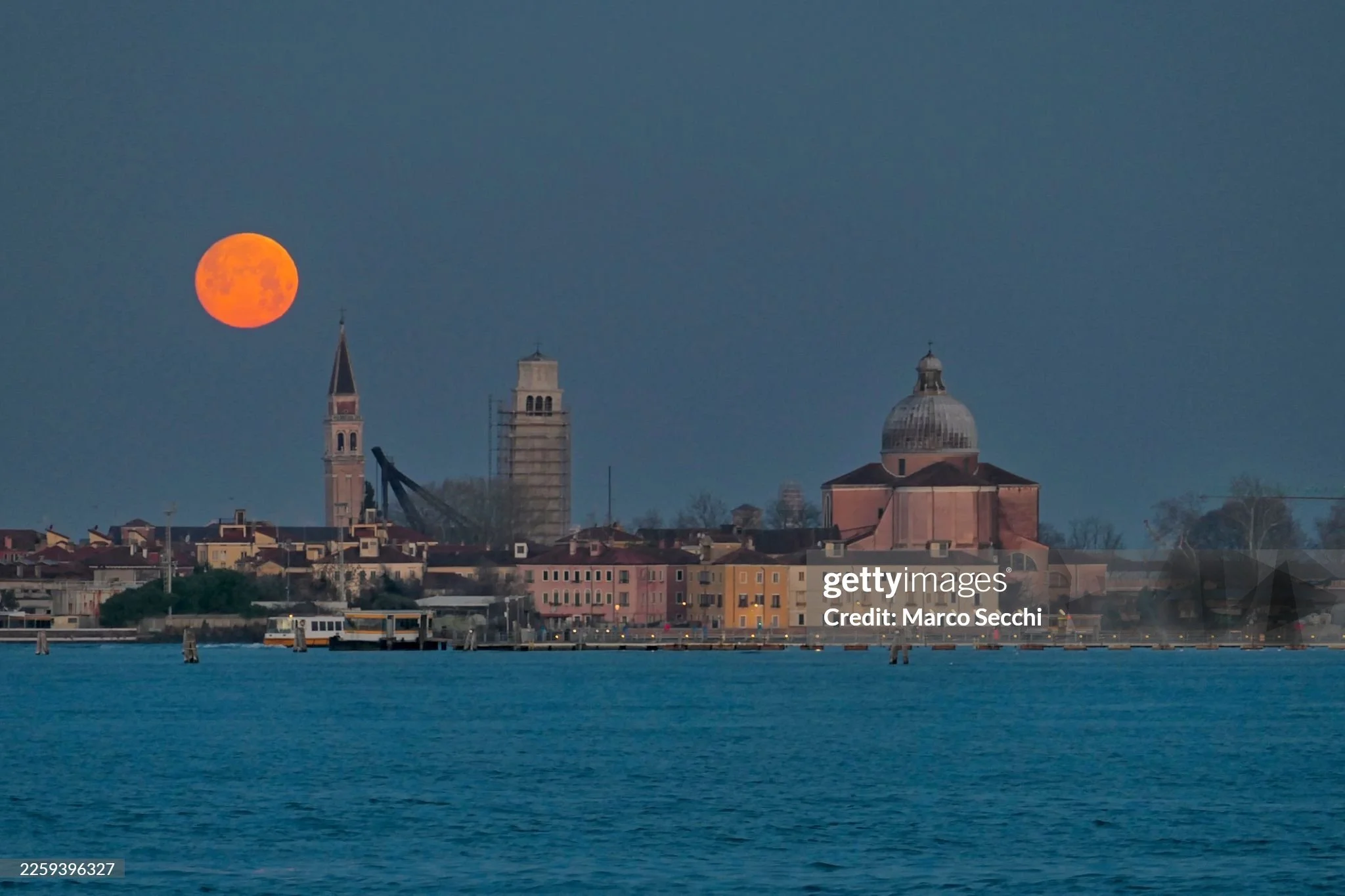
You have characters that are built to be photographed, dramatic faces, textures, props, attitude. You have the most cinematic city on earth as a backdrop. You have winter light, soft fog, low sun angles, reflections, and that Venetian palette that makes everything look like a painting.
And most importantly, you have contrast: the fantasy of the costume against the reality of the city. That contrast is where the story lives.
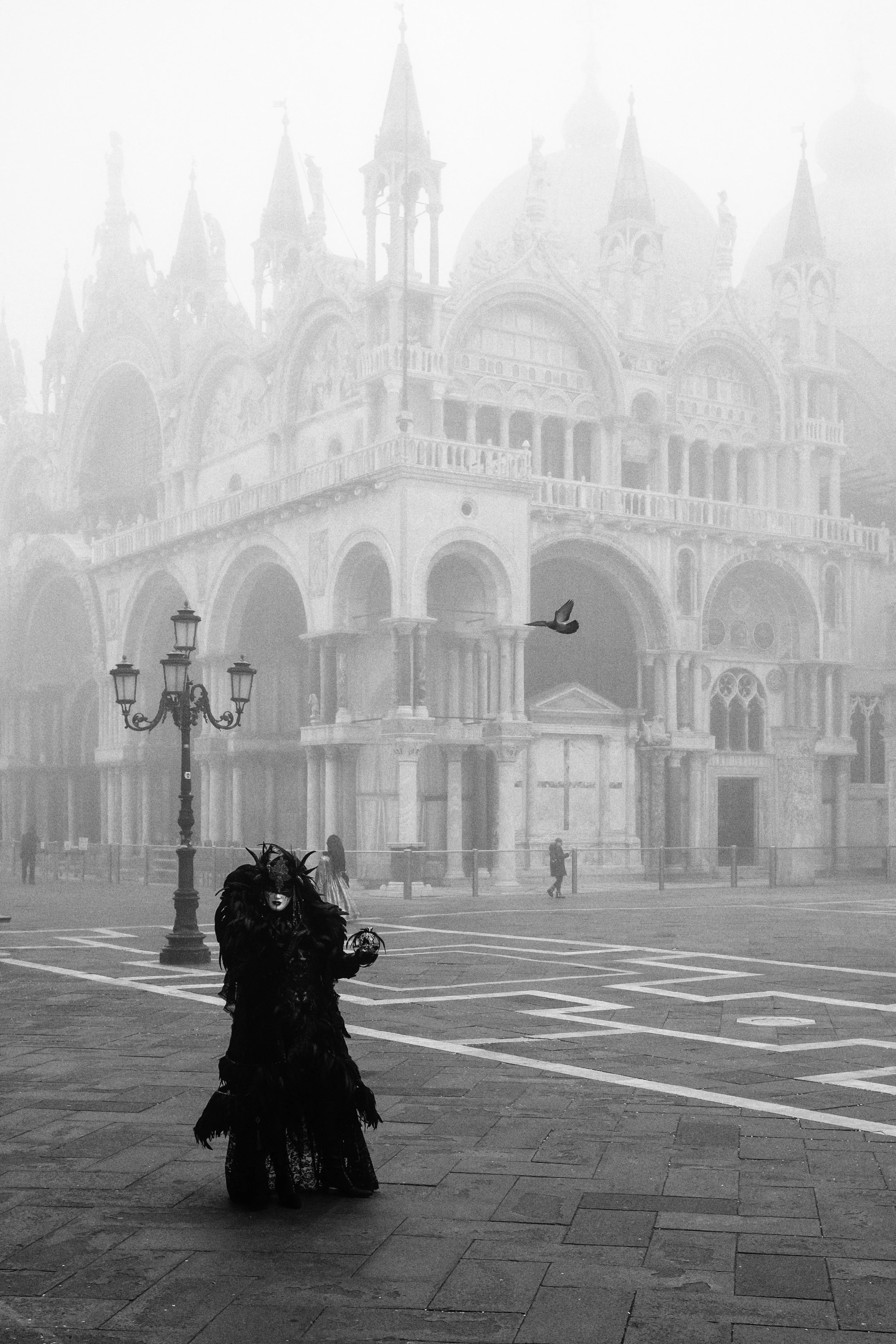
If you only photograph the costume, you get a costume photo.
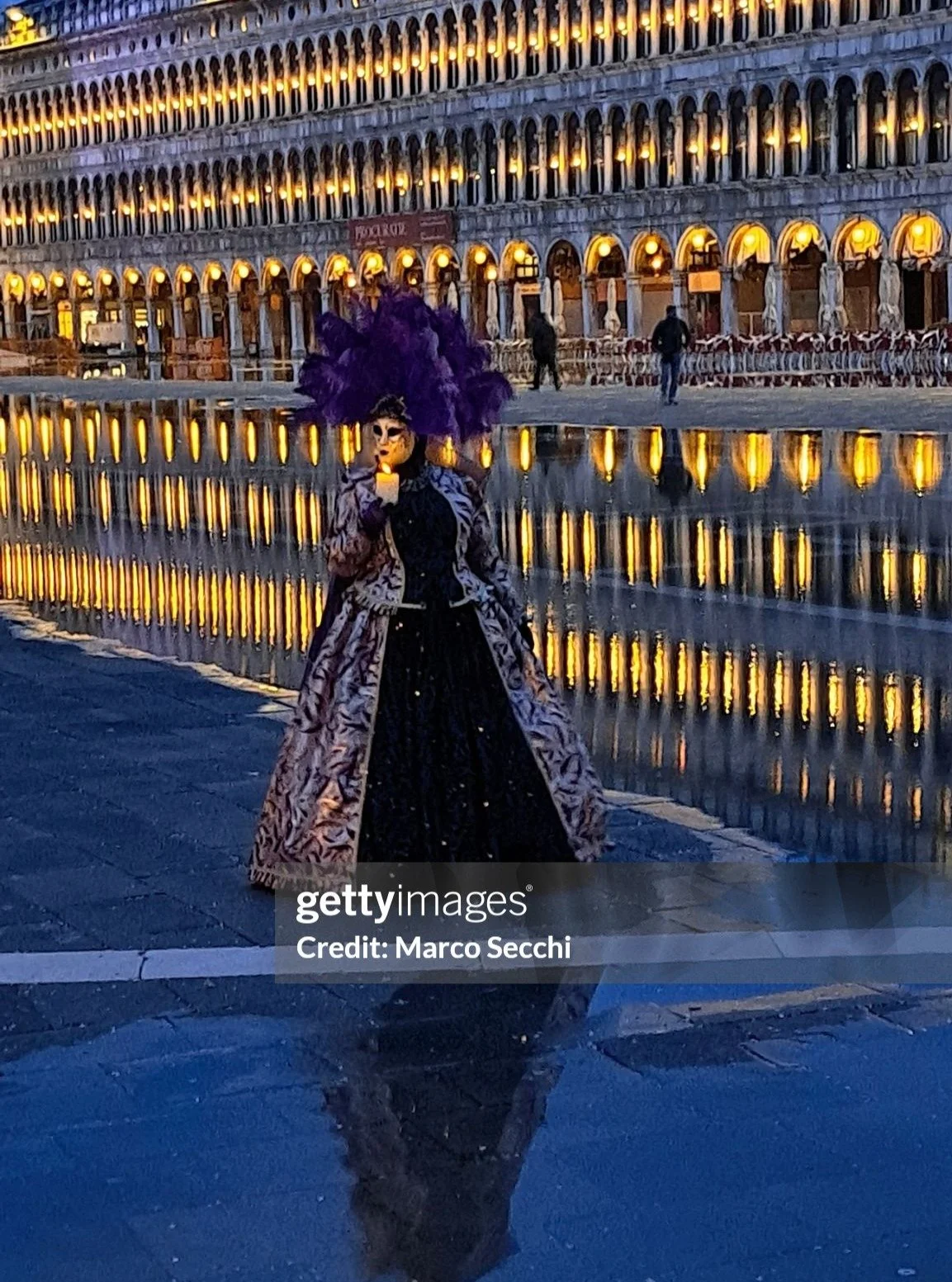
If you photograph the costume in Venice, interacting with Venice, you get something timeless.
3) The two types of Carnival photos (and why most people get stuck)
Most photographers come home with one of these:
Type A: “The catalogue shot”
A clean full-body portrait, centred, sharp, nicely exposed. It’s fine. It’s also what everyone else has.
Type B: “The crowd shot”
A mask surrounded by phones, tourists, chaos. It’s honest, but visually messy, and usually not flattering.
The goal is to make Type C: “The story shot”
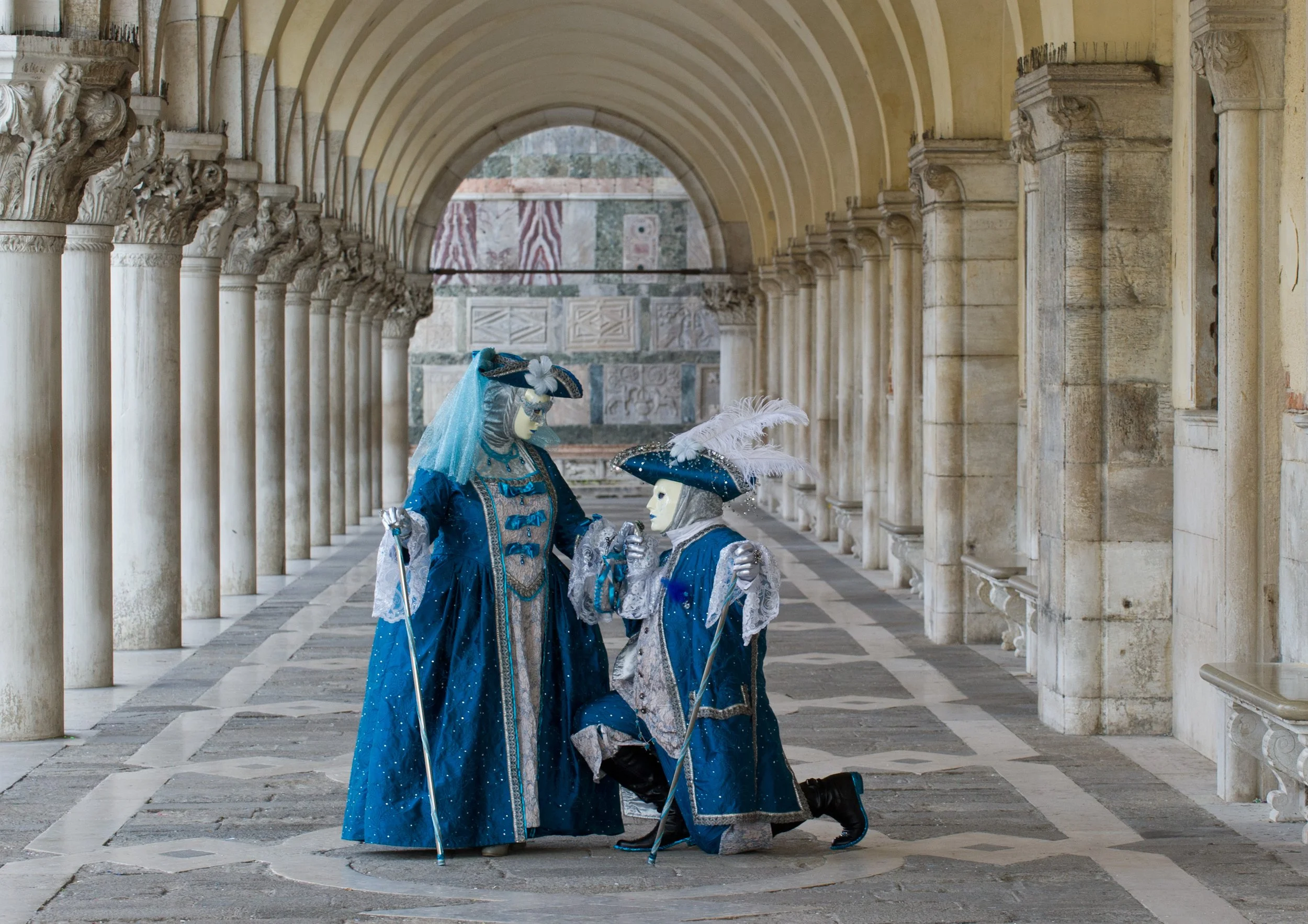
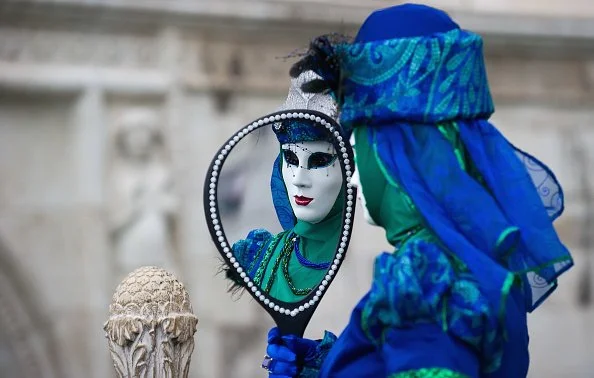
A moment that feels like a scene from a film. A gesture, a glance, a silhouette, a reflection, a mask emerging from darkness, a figure framed by a doorway, a character alone for half a second in a quiet alley.
That’s the Venice Carnival image people remember.
4) Where the best photos actually happen
If you want strong images, think in terms of backgrounds and control.
The famous areas are famous for a reason, but they’re also where you lose control: crowds, random clutter, people walking through your frame, and very little space to work.
The best images usually come from places with:
cleaner architecture behind the subject
narrower streets that naturally frame the scene
soft light (or shade) that makes costumes look rich
fewer distractions, fewer tourists, fewer photographers
You’re not looking for “the best location”.
You’re looking for the best stage.
Venice is full of stages. You just need to pick the ones where the story can breathe.
5) Light matters more than costumes
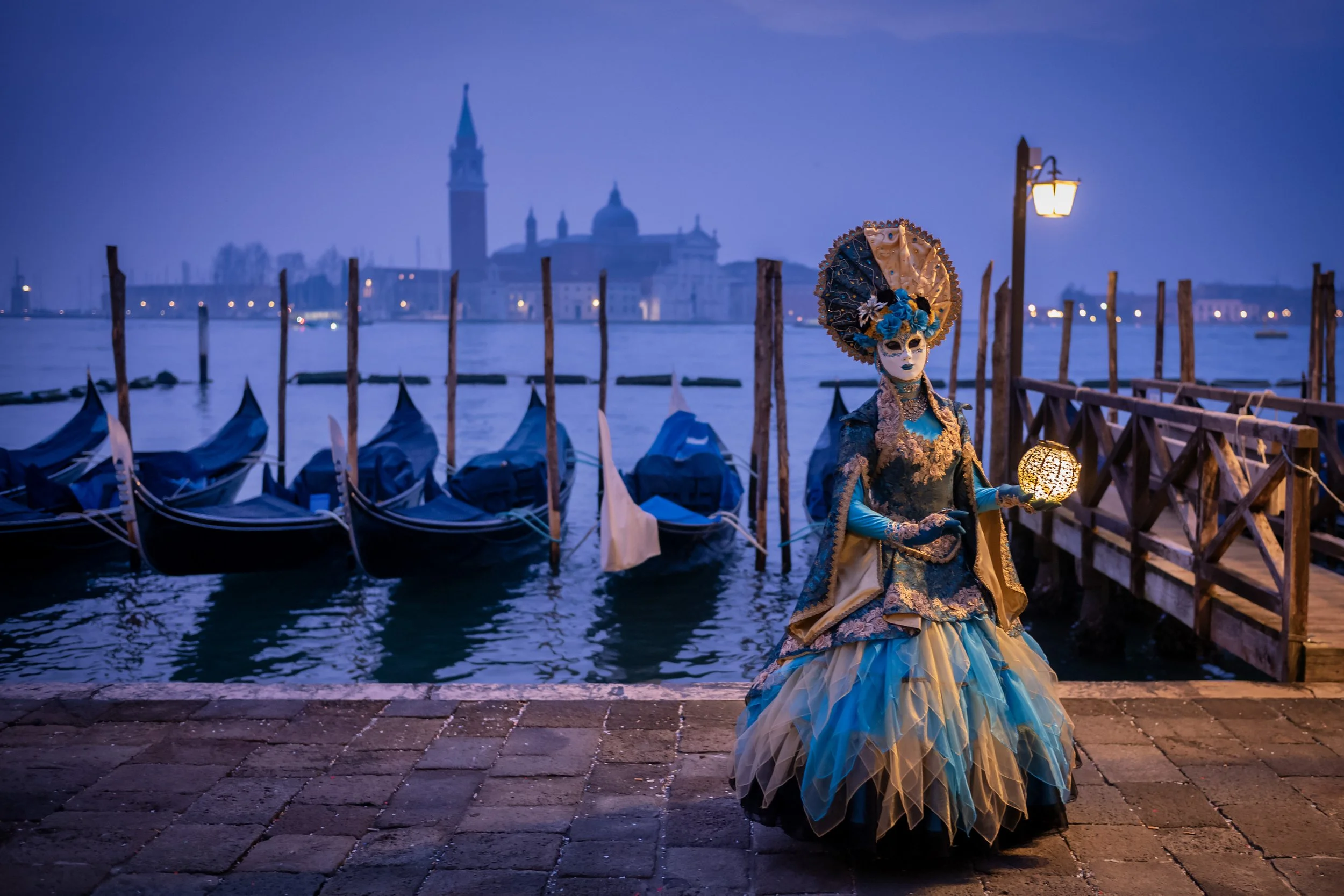
Costumes are consistent. Light is not.
If you shoot Carnival in flat midday light, you get flat images, no matter how incredible the costume is. If you shoot in early morning or late afternoon, everything looks more expensive, more dramatic, more cinematic.
This is why the early hours are so powerful: the city is quieter, the backgrounds are cleaner, and the light is gentle. Even a simple mask becomes interesting when it’s lit properly and placed in the right environment.
If you want one simple rule:
Prioritise light first, subject second.
6) The etiquette of photographing costumed participants
Carnival in Venice is surprisingly generous, but it has its own unspoken rules.
Most costumed participants expect to be photographed. Many enjoy it. Some are performing, some are shy, some are very serious about their character.
A few principles that will instantly improve your experience (and your images):
Make eye contact first.
A small gesture of respect goes a long way.
Don’t grab, don’t push, don’t treat them like props.
If you get a good shot, give them a moment, then move on.
If they’re clearly overwhelmed, leave them alone.
The best Carnival portraits come from collaboration, not conquest.
7) Gear advice that actually matters (and what doesn’t)
You don’t need a specific camera for Venice Carnival. You need a clear approach.
What helps:
a fast lens (for low light and separation)
something you can carry all day
a focal length that lets you work in tight spaces
comfortable shoes (seriously)
What doesn’t matter as much as people think:
having the longest zoom
chasing technical perfection
shooting everything at maximum burst like it’s a sports event
Carnival is theatre, not football.
Timing beats speed.
8) How to come home with images that don’t look like everyone else’s
If you want to make your Carnival work stand out, stop thinking “mask portrait” and start thinking “Venice story”.
Look for:
reflections in shop windows and canal water
silhouettes under arches
frames within frames (doorways, bridges, curtains)
moments between poses
hands, details, textures
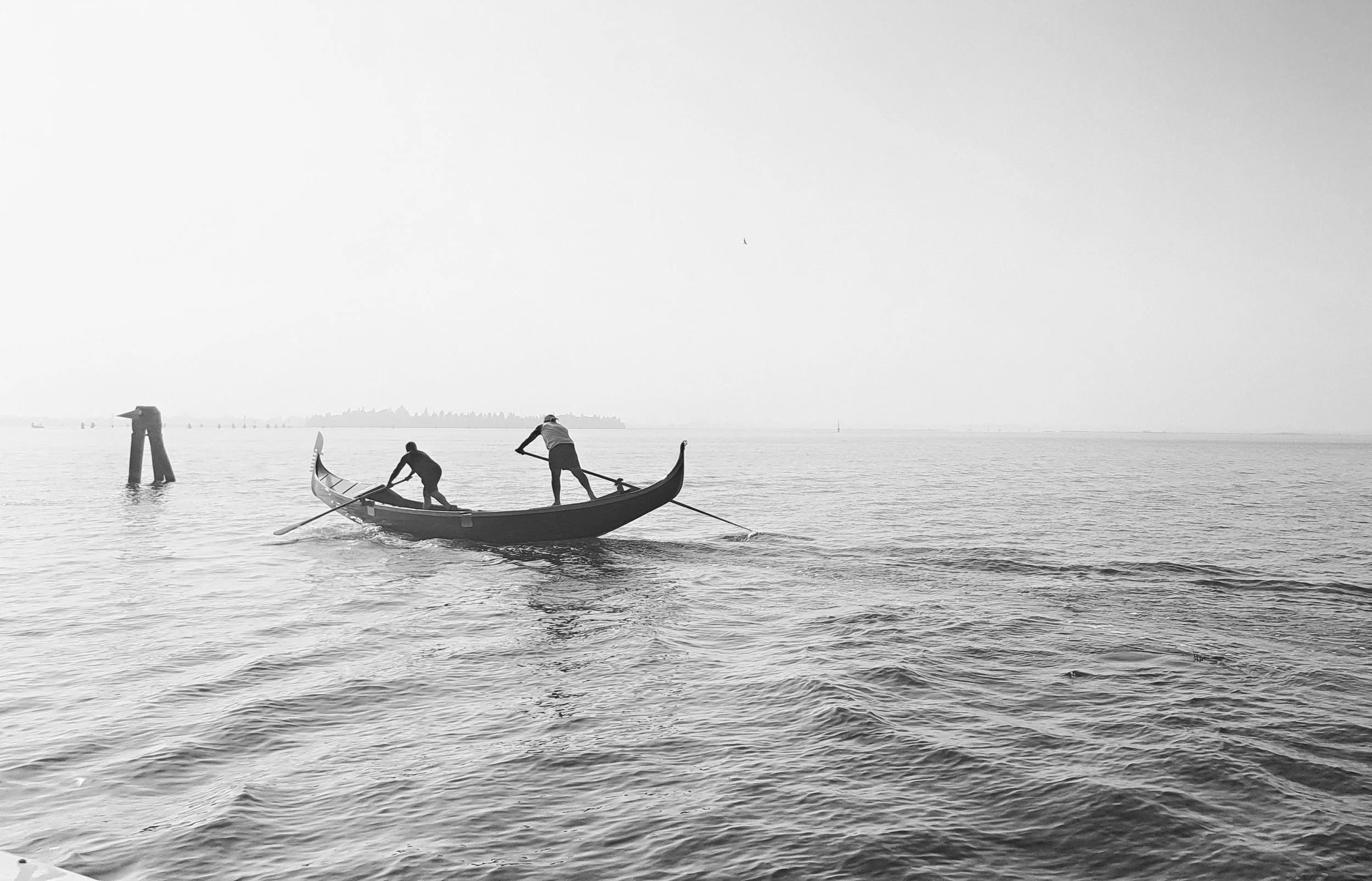
interactions with locals, gondoliers, waiters, children
the contrast between fantasy and normal life
And most importantly: be patient.
Carnival gives you moments, but it rarely gives them on demand.
9) Why Carnival is worth returning to
Every year, Venice Carnival changes slightly, but the essence stays the same. The city, the light, the traditions, the characters, the ritual of it all.
That’s why it rewards photographers who return.
The first time, you learn how it works.
The second time, you start predicting the rhythm.
The third time, you stop chasing and start creating.
And that’s when the images stop looking like souvenirs and start looking like photographs.
If you’re serious about coming home with real photographs (not just “I was there” shots), I also run Venice Carnival photography workshops. We start early, work the quieter streets, and I’ll help you read the light and build stronger frames fast. No pressure at all, but if you’d like info, just drop me a message. HERE